
The View From an IP Attorney's Desk
This is going to be fun. At least as much fun as a branding/tradmarking series of blog posts can be.
I review new business names A lot. Trademark applications, brand launches, startup pitches. After years of this, I can tell you the distribution is not a bell curve. It's negatively skewed. Most names cluster toward the mediocre-to-bad end of the spectrum, a smaller group lands in the acceptable middle, and a rare few are actually good.
This isn't a knock on the people choosing them. Naming a business is genuinely hard. There are branding consultants who can help, but most small businesses either don’t have the money to spend on that or think they can do it themselves. Ideally, you're trying to compress identity, positioning, legal defensibility, and memorability into one or two words, which isn’t easy.
What This Series Is About
Over the next several posts, I'm going to walk through what separates a business name that works from one that doesn't. We'll cover the phonetics of why some words stick in your head, the morphology of how brand names get built, common mistakes I see repeated constantly, and practical tests you can run before committing.
A caveat before we start: these are not hard rules. Language is messy, branding is contextual, and exceptions exist everywhere. Apple broke every "rule" about naming a computer company, which, conversely, makes it an even stronger name. Still, these principles can help you understand why certain names feel stronger than others, and why some are easier to protect legally.
The Distinctiveness Spectrum
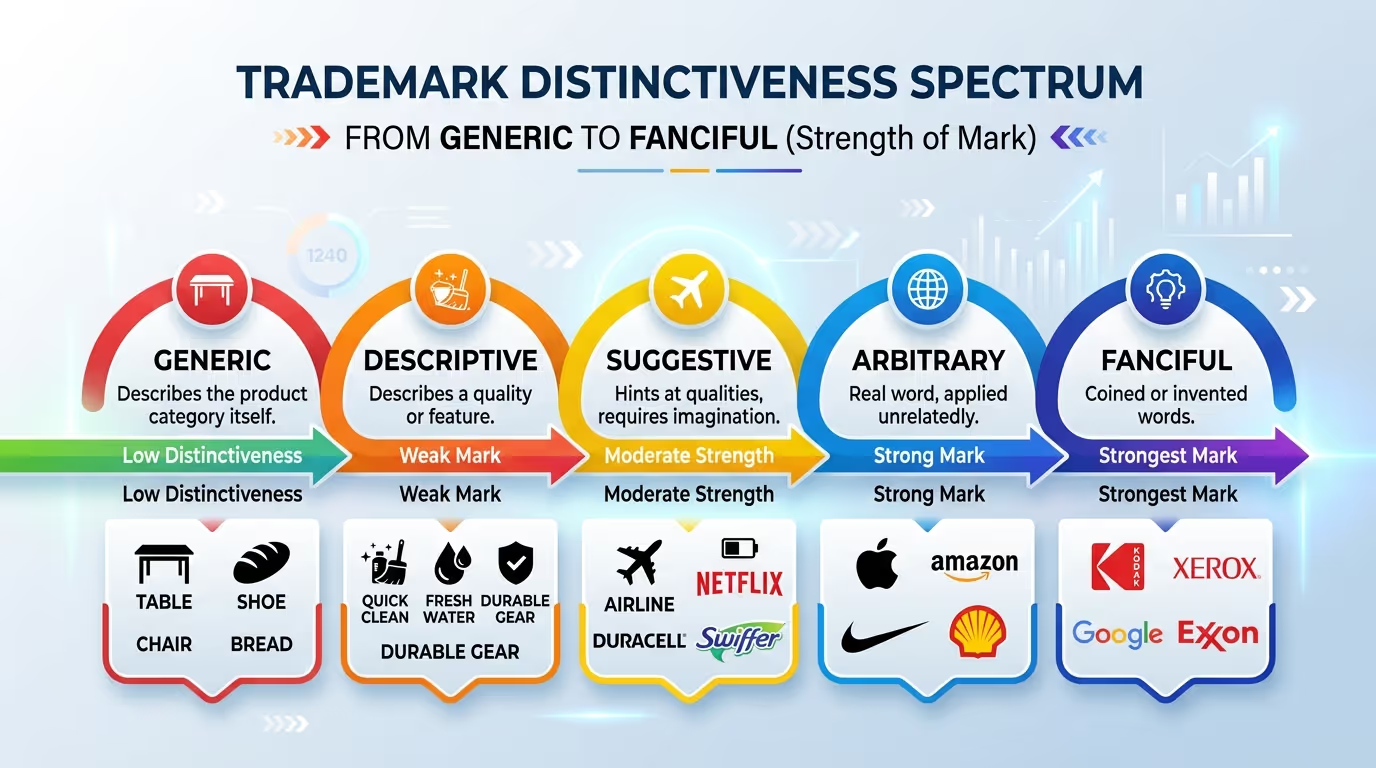
Trademark law gives us a useful model for thinking about names. They fall on a spectrum from weakest to strongest, and where yours lands determines both how protectable it is and how much brand-building work you'll need to do.
Generic names are the product itself. You cannot trademark "Computers" for a computer company. It's everyone's word. Nobody owns it.
Descriptive names tell you what the thing does. "Fast Delivery Co." or "Best Buy." These are hard to protect without years of acquired recognition (which Best Buy eventually got, but it cost them).
Suggestive names hint at a quality without spelling it out. Greyhound suggests speed without saying "fast bus company." Jaguar suggests sleekness. You have to make a mental leap, and that leap is what makes them interesting.
Arbitrary names use real words unrelated to the product. Apple for computers. Amazon for an online store. Shell for gasoline. The word exists, but its connection to the business is entirely invented. Strong protection, memorable, but you need marketing dollars to build the association.
Fanciful names are invented from scratch. Kodak. Xerox. Google, Haagen-Dazs (which is completely made up, by the way, meant to sound vaguely Scandinavian). These get the strongest legal protection because nobody else has any reason to use that word. The tradeoff is you start with zero meaning and have to build everything from nothing.
Where Most Names Go Wrong

The names I see that disappoint tend to cluster at the descriptive end. People want the business name to explain itself immediately, which makes intuitive sense but creates two problems: it's hard to trademark, and it's hard to remember because it sounds like everyone else.
The best names live in the suggestive-to-fanciful range. The more distinctive a name is, the more initial effort it takes to get people to make the connected, but once that happens, they reward the owner with enviable legal strength and broad protection.
In the next post, we'll dig into the specific qualities that make a name work once you've positioned it well on the spectrum.