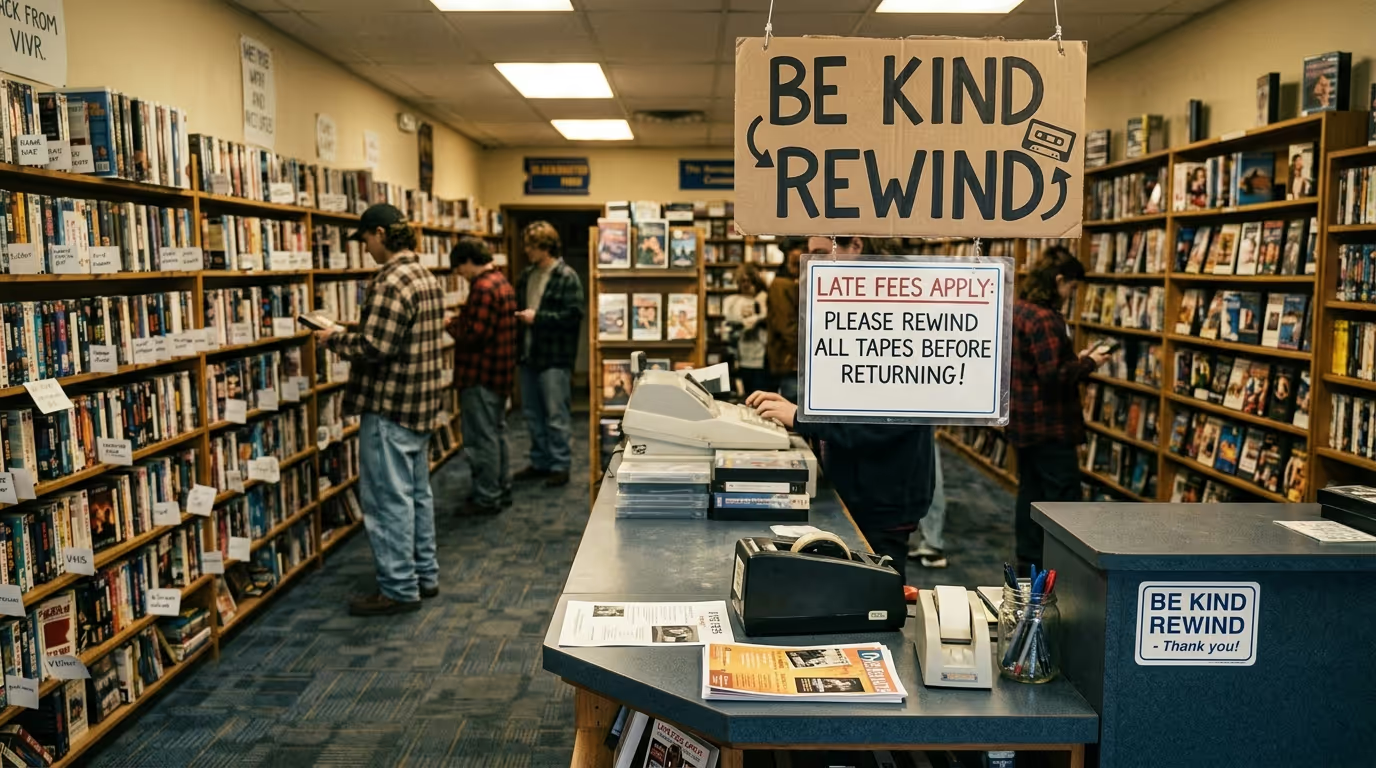
I'm old enough to remember renting videotapes from tiny, locally owned places and having to put down an $80 deposit to rent a movie. You could even rent VCRs because most people didn't own one. Eventually, as happens with everything, the small shops died off as large retailers came in and the mom and pops couldn't compete.
’m old enough to remember putting down an $80 deposit to rent a VHS tape from a shop the size of a closet. Eventually those places got swallowed by Blockbuster, which itself got swallowed by Netflix, which is the circle of life if the circle of life involved late fees and a single surviving store in Bend, Oregon.
So when I saw that Blockbuster LLC filed a TTAB opposition to block a Mississippi company from registering “Block Buster”—for deer feed—my first thought was: Blockbuster still has lawyers?
They do. And the trademark fame question this case raises is more interesting than it sounds.
The Case
In January 2026, Blockbuster opposed Southern Seed and Feed’s application to register “Block Buster” for deer feed and nutritional supplements. Blockbuster claims the packaging uses a blue-and-yellow color scheme that looks a lot like the old torn-ticket logo. The opposition raises likelihood of confusion, misrepresentation of source, and dilution by blurring.
The confusion claim is a tough sell. Nobody walks into a feed store thinking Blockbuster got into deer nutrition. The goods are about as related as submarines and submarine sandwiches.
Does Trademark Fame Survive Nostalgia?
Dilution is probably Blockbuster’s strongest play here. Under Section 43(c) of the Lanham Act, a famous mark gets protection against blurring even when the products have nothing in common. You don’t need to show confusion. You just need a mark so well-known that letting others use it waters down what makes the brand distinctive.
Blockbuster was obviously famous at its peak. Thousands of stores, a household name, a Friday night ritual for a generation of Americans. But the statute cares about trademark fame at the time of the opposition, not at the brand’s high-water mark. And right now, Blockbuster’s commercial presence is one store in Oregon and a portfolio of registrations.
So the TTAB has to wrestle with whether nostalgic recognition counts. Plenty of people know the Blockbuster brand. They just know it the way they know Betamax or AOL—as a cultural reference point, not as somewhere they’d actually spend money.
I think Blockbuster probably has enough residual fame to survive a motion to dismiss on the dilution claim. The brand still shows up in pop culture constantly, the Bend store is a tourist destination, and the name registers with the general public. But “enough to survive a motion” and “enough to win” are different things. I wouldn’t bet on a dilution claim built mostly on nostalgia.
What Happens Next
Southern Seed and Feed has 40 days from the January filing to respond. If the case moves forward, discovery will probably focus on consumer perception surveys and how broadly Blockbuster’s current trademark use actually extends. And Southern Seed could counterpunch by filing cancellation petitions against some of Blockbuster’s registrations for non-use.
Whatever the outcome, the case puts a question on the table that’s going to keep coming up as big 20th-century brands fade from commerce but stick around in memory: when does trademark fame become trademark history?
Be kind. Feed deer. And maybe don’t copy the logo.