
More Than a Gut Feeling
You know a great business name when you hear one. But "I'll know it when I see it" is a terrible brief for something this consequential. So here are the five qualities I look for when a client asks me whether their name has legs. They usually don't ask me that, but if they did...
Memorable
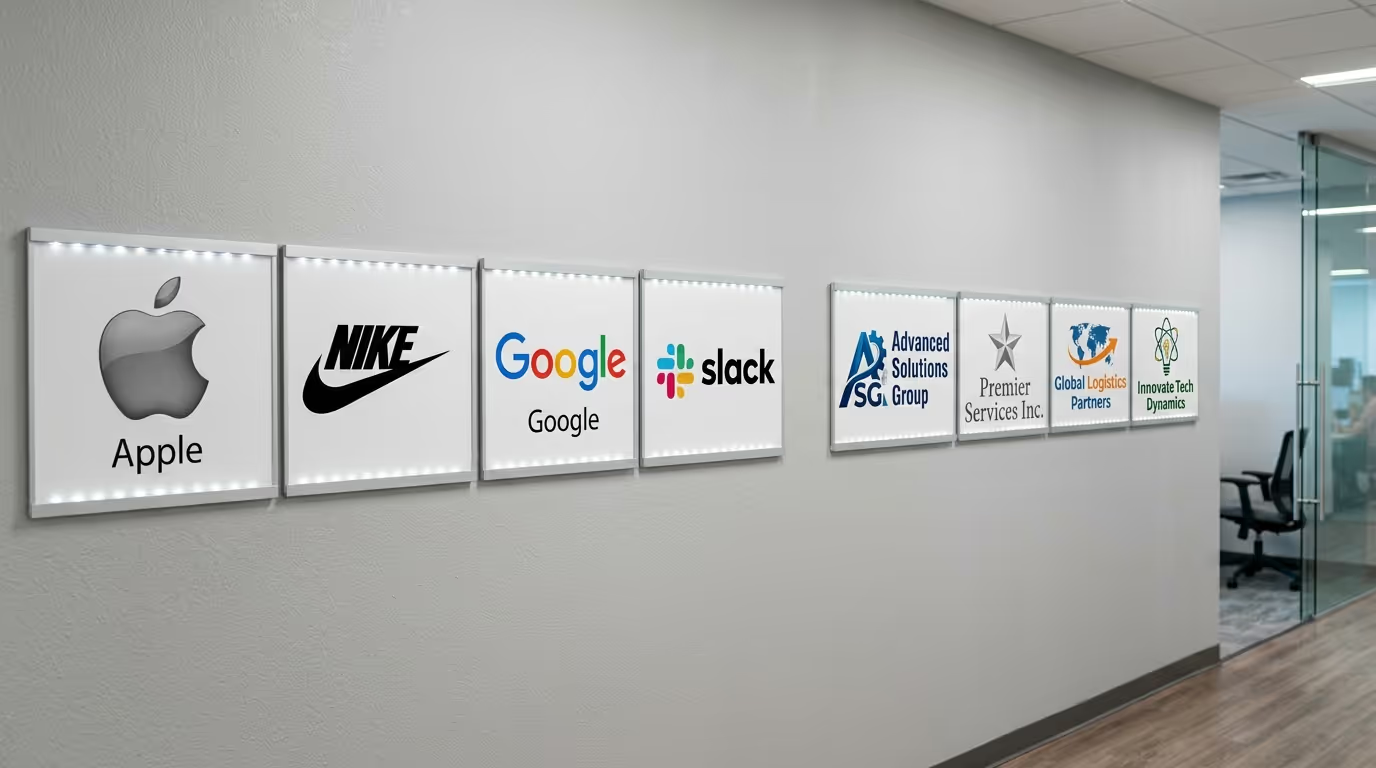
Can someone hear it once and recall it the next day? Stripe. Slack. Zoom. Each is short, phonetically crisp, and distinct enough that it doesn't blur into the background noise of other brands.
Contrast that with something like "Integrated Business Solutions Group." You've already forgotten it. A great business name creates a small cognitive footprint that sticks without effort.
Distinctive
Does it stand apart from competitors or does it sound like everyone else in the industry? Walk through a strip mall and count the dental practices named "[Surname] Family Dentistry." They all blur together. Then you see one called "Bite" or "Toothy" and it registers differently.
The legal corollary here: distinctiveness is what makes a name protectable. If yours sounds like thirty others in your space, you're going to have a hard time both in the marketplace and at the trademark office.
Scalable
Will the name still work if you expand? Amazon started selling books. If Bezos had named it "BookMail" we'd be having a different conversation. Likewise, Apple made computers in 1976 but the name never boxed them out of phones, watches, or streaming.
I've had clients come to me wanting to rebrand because their name describes one product they've outgrown. "Dave's Custom Decks" wants to do full renovations now, and the name is a cage.

Meaningful
The best names carry some emotional or conceptual weight. Nike is the Greek goddess of victory. Patagonia evokes ruggedness and open wilderness. Even Mailchimp, which sounds playful, signals that email marketing doesn't have to be a corporate slog.
Meaning doesn't require literal description. It just requires that the name feels like something, even if that feeling is invented through association.
Simple
Short tends to beat long. One to three syllables is the sweet spot for recall. Uber. Lyft. Nest. Hulu. When a name gets longer, it usually gets shortened anyway. Federal Express became FedEx. International Business Machines became IBM. You might as well start short.
Simplicity also means easy to spell and pronounce. If someone hears your great business name on a podcast and can't type it into a browser without guessing, you've created friction before you've even started.
The Tension
These qualities sometimes compete with each other. A meaningful name might sacrifice simplicity. A distinctive name might sacrifice immediate clarity. You probably can't max out all five, and that's fine. But knowing the tradeoffs lets you make deliberate choices instead of accidental ones.
In the next post, we'll cover the practical checklist you should run through before you commit.
This is the second in a series on choosing a brand name.
Here's the previous post
Here's the next post